8 Makeup Mistakes That Age You (And What to Do Instead)
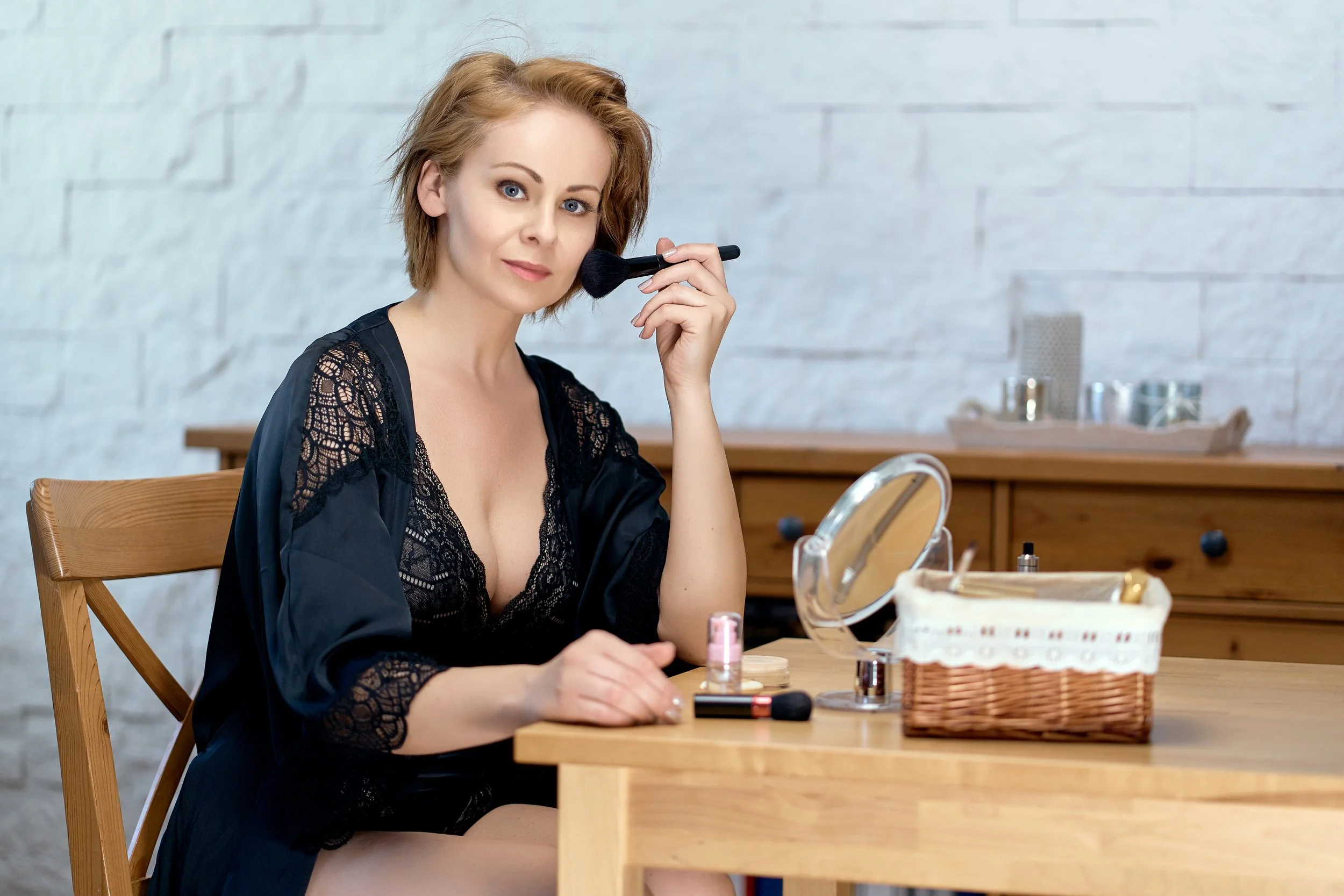
You put your makeup on at 7am in bathroom light and leave the house satisfied. Then you catch your reflection at noon in a shop window and notice that the foundation has settled into the lines around your mouth in a way it didn't use to. The concealer under your eyes has creased into a fine-line map. The eyeliner you drew confidently this morning has migrated to the wrong place and taken years in the wrong direction with it.
None of this happened at 35. The products are often the same. The technique is often the same. But the face has changed — the skin is drier, more textured, the lines are more present, the eyelids have a different quality — and the same approach that worked for twenty years is now working against it rather than with it.
This is not a problem of wearing too much makeup or the wrong makeup. It is almost entirely a problem of technique: specific applications and product choices that were appropriate for a different skin type at a different stage and that now, on this skin, produce an aging rather than a polishing effect. Every mistake below has a direct, practical fix — not a different face, just a different method.
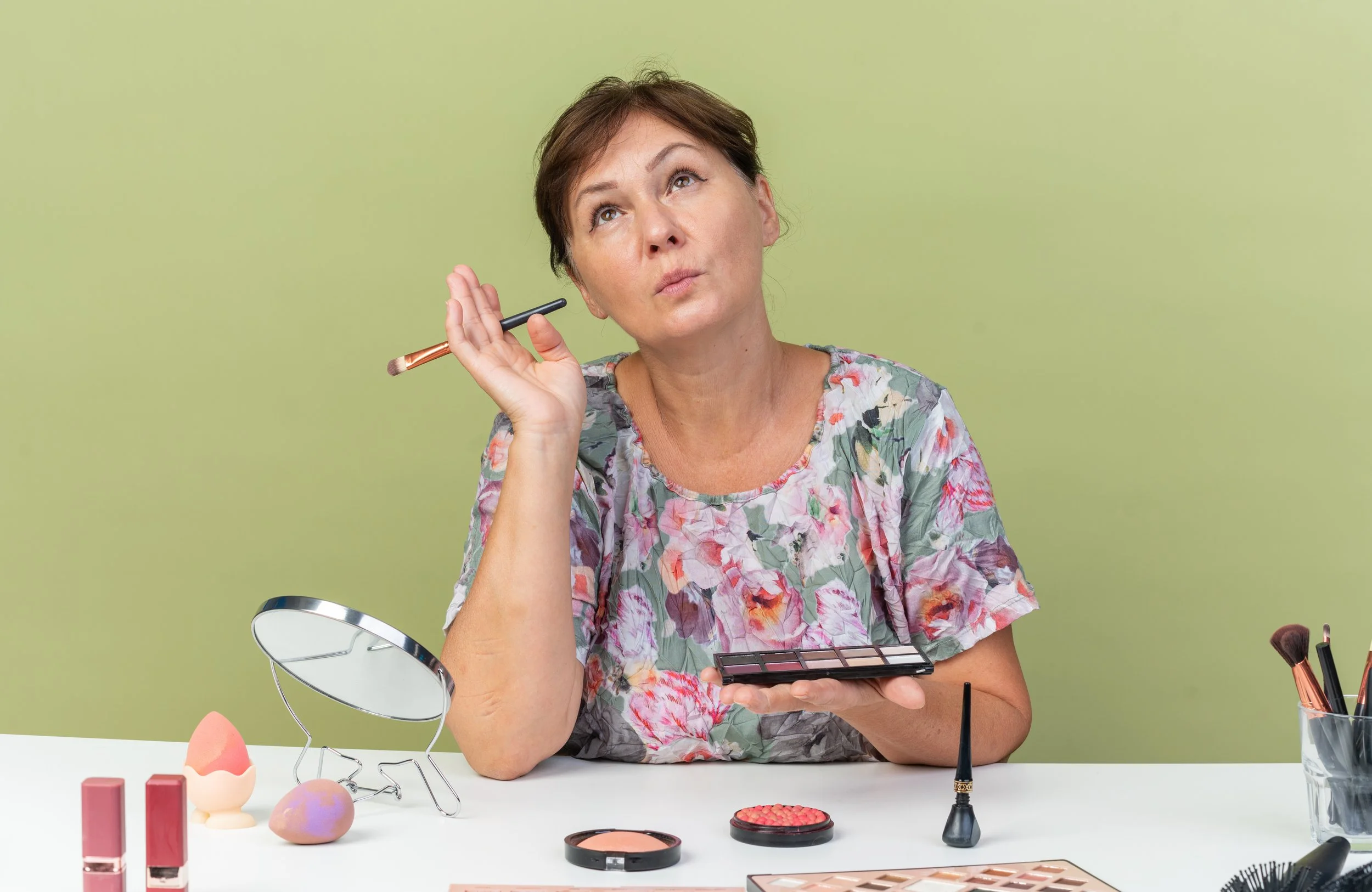
Most makeup that ages after 50 is not a product problem — it's a technique problem. The same products, applied differently, produce a completely different result on skin that has changed.
Mistake 1: Heavy foundation that settles into lines
Why it happens: the foundation that provided good coverage at 35 — typically a higher-coverage, sometimes more viscous formula — now sits on the surface of mature skin rather than blending into it. As the day progresses, it moves into the fine lines around the eyes, nose, and mouth that it previously obscured, settling there and making those lines more visible rather than less. Dry mature skin also holds foundation differently from the combination skin of earlier decades — product that provided even coverage then now emphasises texture and dryness.
The fix:
Switch to a lightweight, hydrating formula — a tinted moisturiser, a skin tint, or a serum foundation. These move and breathe with the skin rather than sitting on its surface. Apply with fingers (the warmth of the hand helps the product blend seamlessly) or a damp beauty sponge (which stipples rather than sweeps, preventing the dragging that ages skin). Build coverage only where you need it — concealer on specific spots rather than a second layer of foundation over the whole face. If you want to keep a more coverage-forward formula, applying it over a well-moisturised base and setting only under the eyes (not all over) significantly reduces settling.
Mistake 2: Setting powder applied everywhere
Why it happens: the powder habit was learned when the goal was eliminating shine and setting liquid products in place. On younger, oilier skin, powder controlled the oil and made everything last. On drier mature skin, powder absorbs the limited natural moisture the skin produces, emphasises fine-line texture immediately, and produces a flattened, matte finish that reads as aged rather than polished. The difference between set and dry is invisible at 35 and very visible at 55.
The fix:
Apply powder only where you genuinely need it — typically a small amount under the eyes to prevent concealer creasing, and the T-zone if it remains oily. Nowhere else. A light setting spray (Urban Decay All Nighter, MAC Fix+, or similar) applied after makeup provides hold without the drying effect of powder. For the rest of the face, switching from powder to cream products — cream blush instead of powder blush, cream bronzer instead of powder bronzer — removes the product layer that dries and ages. the full routine that uses cream products effectively explains when to sequence each.
Mistake 3: Brows drawn too dark or too hard
Why it happens: the brow product selected at 40 matched the natural brow colour at 40. But brow hair lightens with age — both the colour and the density change — and the brow product that was accurate then is now darker than the natural hairs, creating an artificial, drawn-on effect that looks heavier and harder than intended. Dark, hard brows on a face with lighter, finer natural brows are one of the most immediately visible signs of using the same makeup approach beyond its relevance.
The fix:
Go one to two shades lighter than your instinct suggests. If you've been using a dark brunette brow product, test a medium brunette or a taupe. If you've been using a medium shade, try an ash or golden-light shade. The goal is a brow that reads as well-defined but that matches the lightened natural hair rather than contrasting with it. The technique also matters: feather strokes that mimic individual hairs (rather than a single drawn line at the base of the brow) produce a filled-but-natural result regardless of shade. A brow gel — clear or lightly tinted — to set the hairs in place after filling completes the look.
Mistake 4: Eyeliner drawn on the lower waterline
Why it happens: drawing eyeliner on the inner rim of the lower eye (the waterline) was a standard technique for adding definition and perceived depth to the eye. On larger, rounder eyes it could add drama. On the eyes of most women over 50 — where the orbital area has naturally receded slightly and the eye appears smaller in the context of a changed face — the same technique makes the eye look smaller, more closed, and more tired. The dark line on the waterline is pulling the eye inward rather than opening it outward.
The fix:
Remove lower waterline liner from the routine, or replace it with a nude or white pencil on the waterline (which optically opens the eye rather than closing it). If lower lash definition is wanted, apply a soft smudge of dark eyeshadow just below the lower lashes — outside the waterline — rather than on the rim itself. This creates definition without the eye-closing effect. Upper lash line definition remains beneficial and can be kept; the change is specifically on the inner lower rim.
Mistake 5: Lip liner noticeably darker than the lipstick
Why it happens: the technique of overlining with a darker liner to create the appearance of fuller lips was effective when the lips were naturally fuller. After 50, the lips naturally lose volume and the vermilion border (the defined edge between lip and surrounding skin) softens slightly. A liner significantly darker than the lipstick doesn't create an illusion of fullness — it draws attention to an outlined shape rather than reading as natural lips, emphasising the very thing it's trying to obscure.
The fix:
Use a lip liner in the same shade as, or only minimally darker than, your lipstick — or, more effectively, a liner in a shade close to your natural lip colour. The liner's function on mature lips is to prevent colour bleeding into the fine lines around the mouth (a satin or cream formula does this better than matte), to give the lip colour something to adhere to, and to define the edge cleanly without creating a visible outline. If you want to add the appearance of volume, a small amount of a lighter, slightly shimmery product in the centre of the lips over the lipstick is more effective than a darker liner perimeter.
Mistake 6: Skipping brow filler entirely
Why it happens: many women with naturally full brows at 35 never developed a brow-filling habit because they didn't need one. By 50, brow density has typically decreased — hairs shed without being replaced at the same rate, gaps appear particularly at the outer third, and the overall shape becomes less defined. Skipping brow product on brows that have become sparse leaves the face looking unframed in a way that was not previously true.
The fix:
Even minimal brow filler — a lightly tinted clear gel, a powder applied with an angled brush, or a fine pencil in a natural shade — makes a significant difference to how the face reads. The brow is the primary framing element of the upper face; well-defined brows produce a more alert, younger-reading eye area without any eye makeup at all. If you have never used a brow product and find them difficult to apply, a brow serum used nightly to stimulate growth and a single clear or lightly tinted brow gel applied in the morning in the direction of hair growth is the lowest-effort version that produces real results. the complete no-makeup makeup routine covers the brow step in the context of a full minimal look.
Mistake 7: Foundation that stops at the jaw
Why it happens: most foundation application techniques focus on the face — forehead, nose, cheeks, chin. The neck is treated as a separate zone and often receives no product. At younger skin tones and textures, the difference between face and neck may be minimal enough to be invisible. After 50, the face typically carries more product (SPF, skincare, foundation) and may be slightly more bronzed from occasional outdoor exposure, while the neck is bare. The line where foundation stops becomes visible, particularly in directional or overhead light.
The fix:
Blend foundation down the neck with the same tool used for the face — a damp sponge works particularly well here — and finish at the collarbone. This requires slightly more product and slightly more time but eliminates the visible line. Alternatively, and more consistently effective: match the face product more precisely to the neck skin tone by testing foundation on the jaw (not the back of the hand, where the skin colour is different) and choosing the shade that disappears at the jaw rather than creating a line. A foundation half a shade warmer than the face applied to the neck and décolletage with a sponge on special occasions produces a completely even result.
Mistake 8: Shimmer eyeshadow on mature eyelids
Why it happens: shimmer and glitter eyeshadow reflects light in a way that was flattering and luminous on smooth, taut eyelid skin. The same reflective particles on the crepey, slightly lax eyelid skin that develops after 50 catch the light differently — they settle into fine surface texture and emphasise it rather than smoothing it, creating a sparkly-but-creased effect that reads older rather than brighter.
The fix:
Use matte or satin-finish eyeshadows on the lid surface itself — these absorb rather than reflect light and are more flattering on textured eyelid skin. Reserve any shimmer for the very inner corner of the eye (a specific, small application of a champagne or gold shimmer at the inner corner opens the eye and adds brightness without the texture-emphasis problem) and for the brow bone highlight (a subtle satin shade below the brow bone, blended out, adds lift and luminosity without sitting in eyelid texture). The overall eye look with matte on the lid and a small strategic shimmer element reads as more sophisticated and more flattering than shimmer across the whole lid.
The underlying principle
All eight mistakes share a common thread: they are techniques developed on different skin — younger, smoother, oilier, differently textured — that haven't been updated alongside the skin's evolution. The face changes; the makeup habit doesn't; the result diverges from the intention.
None of the fixes require more product, more time, or more expense. They require adjustment: lighter formulas, softer techniques, shades recalibrated to match changed natural colouring, products placed more precisely where they do specific work rather than applied broadly as a layer. Makeup after 50 is not more demanding than makeup at 35 — it's differently demanding. Learning the differences produces a significantly better result from the same morning routine.
Our weekly letter covers makeup, beauty, and style for women over 50. Subscribe at femmementor.com.