Managing Hot Flushes and Night Sweats: What Works, What Doesn't, and What to Ask Your GP

A hot flush arrives without warning. A wave of heat from the chest upward. The face flushing, the skin prickling, sometimes breaking into sweat. It lasts one to five minutes. Then it passes. For some women, this happens twice a day. For others, twenty times. For some, it wakes them every two hours through the night for years.
Hot flushes and night sweats — together called vasomotor symptoms — are the most commonly experienced and most widely known symptom of menopause. They are also among the most consistently undertreated: many women are told to expect them and endure them, when effective management exists and is their right to access.
This article covers what's happening physiologically, how long vasomotor symptoms typically last, and the full range of management options — from evidence-based lifestyle approaches to medical treatments, including the newest options. It also covers what to ask your GP if you are not getting the support you need.
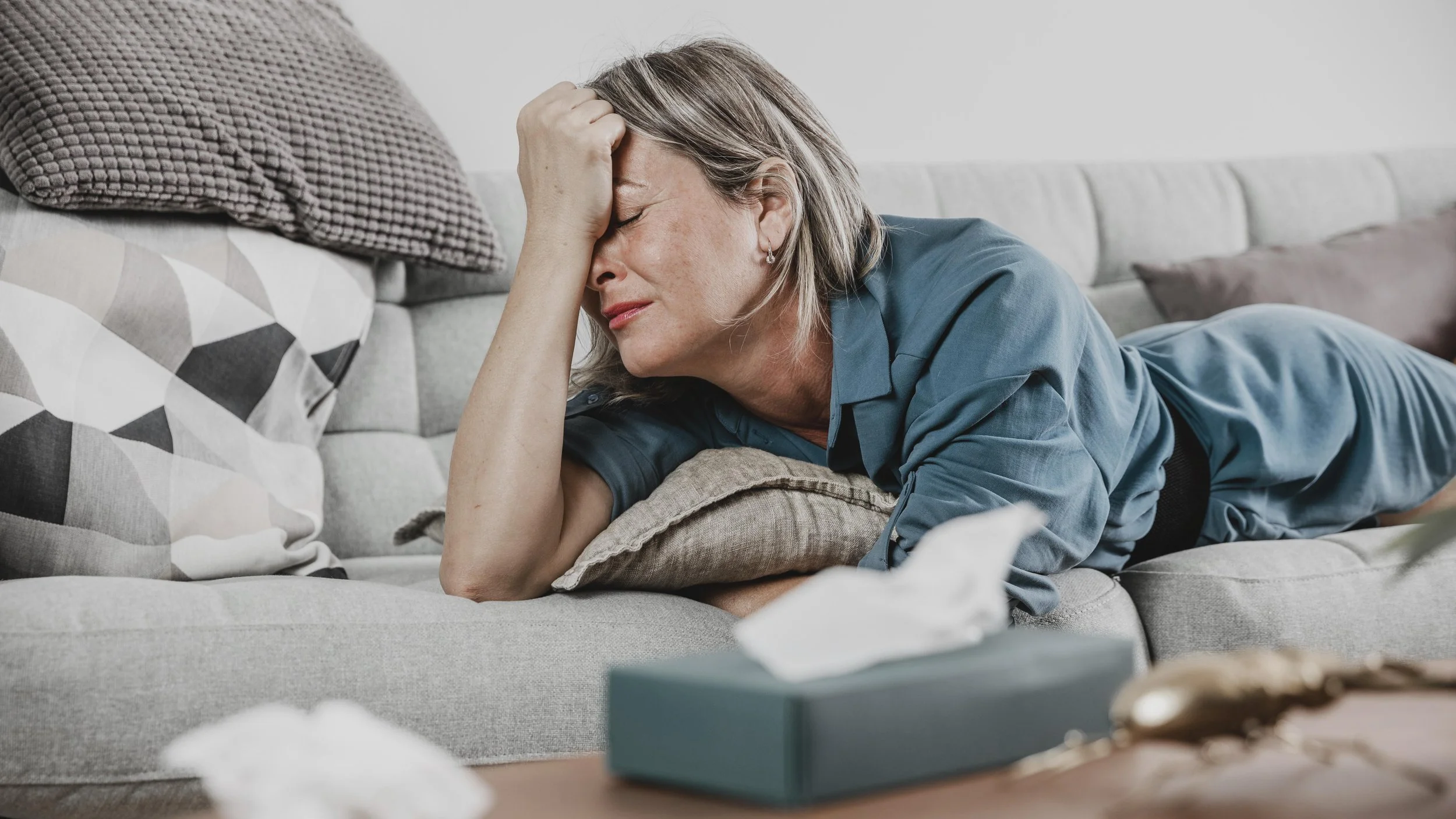
Hot flushes are not a minor inconvenience to be endured. At their most severe they significantly impair sleep, work, and quality of life. Effective treatments exist. Women are entitled to them.
What's happening — the physiology
Hot flushes are caused by a dysfunction of the thermoregulatory system — the mechanism by which the body maintains core temperature. In a normal thermoregulatory system, body temperature has a comfortable range (sometimes called the thermoneutral zone) within which the body is neither shivering nor sweating. A small rise in temperature triggers cooling responses; a small drop triggers warming responses.
During perimenopause and menopause, estrogen loss destabilises this system. The thermoneutral zone narrows — sometimes to near zero. A very small temperature change, or a perceived change, can trigger the full heat-dissipation response: blood vessels in the skin dilate to radiate heat, sweat glands activate, and the sensation of intense heat is produced. The body is not overheating — it believes it is, and responds accordingly.
The mechanism by which estrogen loss produces this thermoregulatory instability involves the neurotransmitter norepinephrine and neurons in the hypothalamus (the brain's temperature regulation centre). This is why some non-hormonal medications — particularly those affecting norepinephrine — can reduce hot flush frequency and severity. It's also why stress, caffeine, and alcohol can trigger flushes: they all affect the same neural pathways.
How long do they last?
The cultural expectation that vasomotor symptoms last two to three years is not supported by the research. A large longitudinal study (the Study of Women's Health Across the Nation, SWAN) followed women through the menopause transition and found that the median duration of frequent vasomotor symptoms was 7.4 years. More than a third of women experienced them for ten or more years. Symptoms beginning before the final menstrual period tended to last longer than those beginning after it.
This is important information not because it is discouraging, but because it changes the basis for treatment decisions. If vasomotor symptoms lasted reliably for two years, the case for tolerating them might be stronger. When they may last a decade, the case for active management is correspondingly stronger.
Medical management — the options
Hormone replacement therapy (HRT)
HRT is the most effective treatment for vasomotor symptoms — more effective than any other medical or lifestyle intervention, with typical reductions in flush frequency and severity of 80-90 percent in clinical trials. For women with moderate to severe symptoms, it is the first-line treatment recommended by NICE, the British Menopause Society, and most major menopause organisations. The full evidence on HRT — its benefits, risks, and forms — is covered in our complete guide to HRT.
Non-hormonal prescription medications
For women who cannot take or choose not to take HRT, several non-hormonal prescription options have evidence for vasomotor symptom reduction:
Fezolinetant (Veoza): a newer medication (approved by NICE in 2024) that blocks neurokinin B, a neuropeptide involved in the thermoregulatory mechanism. Clinical trials show approximately 50-60 percent reduction in hot flush frequency. This is the first specifically-designed non-hormonal medication for hot flushes and represents a significant advance for women who cannot take HRT.
SSRIs and SNRIs: antidepressants including venlafaxine, desvenlafaxine, paroxetine, and escitalopram reduce hot flush frequency by approximately 40-60 percent compared to placebo. They are most useful for women with co-existing mood symptoms or who cannot take HRT. They do not relieve all menopause symptoms and carry their own side effect profiles.
Clonidine: a blood pressure medication with some evidence for hot flush reduction, though less effective than HRT or SSRIs and with a significant side effect burden (dizziness, dry mouth, sedation). Not first-line but available for some women.
Gabapentin: evidence for modest hot flush reduction, particularly for night sweats. Sedating, which may be beneficial for sleep disruption. Not first-line.
Lifestyle management — with evidence levels
Keeping cool: immediately effective
Cooling the environment and managing clothing layers is the most immediately effective lifestyle approach. Keeping the bedroom temperature between 16 and 18°C significantly reduces night sweat frequency and severity. Lightweight, natural-fibre bedding (cotton, bamboo, linen) that can be layered and removed is more effective than a single heavy duvet. For daytime flushes: layers that can be removed, portable fans, cooling towel or mist. These strategies don't reduce the underlying frequency of flushes but dramatically reduce their impact.
Aerobic exercise: good evidence
Regular aerobic exercise — particularly vigorous walking, swimming, or cycling — is associated with reduced hot flush frequency and severity in multiple observational studies. The mechanism likely involves central thermoregulatory adaptation and effects on norepinephrine. The evidence is not as strong as for HRT or medications, but the additional benefits (cardiovascular, cognitive, bone, mood) make exercise a high-value intervention regardless of its specific effect on vasomotor symptoms.
CBT (cognitive behavioural therapy) for hot flushes: underused but evidence-based
CBT specifically adapted for menopause hot flushes has surprisingly strong evidence — three randomised controlled trials show significant reduction in how much hot flushes bother women, even when flush frequency itself doesn't change. The mechanism involves changing the cognitive and emotional response to flushes (catastrophising, anticipatory anxiety) which itself triggers and worsens them. NICE recommends CBT as an evidence-based non-hormonal option. The 'Mindfulness for Menopause' and 'Managing Hot Flushes and Night Sweats' (Hunter & Smith) programmes are available in the UK.
Avoiding triggers: variable evidence but individually useful
Alcohol, caffeine, spicy food, and hot drinks are commonly cited triggers. The evidence that reducing them systematically reduces flush frequency is limited — but many women identify specific personal triggers through a symptom diary, and avoiding those particular triggers is individually effective. Worth testing; not universally necessary.
Weight: modest effect
Higher BMI is associated with more frequent and severe hot flushes, likely because adipose tissue insulates and impairs heat dissipation. Weight loss in overweight or obese women has been shown to reduce flush frequency. This is not a reason to pursue weight loss at any cost — the stress of restriction may worsen symptoms — but it is a legitimate factor.
What doesn't work — the honest assessment
Phytoestrogens (isoflavones, found in soy and marketed in supplements including red clover): evidence is inconsistent across trials and overall modest. Some women experience benefit; many don't. Not harmful at food levels; supplements with standardised doses have variable evidence and are not recommended as first-line by any major menopause organisation.
Black cohosh: the most popular herbal supplement for menopause symptoms. Evidence is inconsistent across trials, and most high-quality trials show little effect beyond placebo. Rare cases of serious liver toxicity have been reported. Not recommended by the British Menopause Society as a reliable or safe alternative to established treatments.
Most other herbal supplements marketed for hot flushes: evening primrose oil, dong quai, wild yam — the evidence is insufficient or absent. Some carry drug interactions. These are not recommended as primary management for significant symptoms.
Night sweats — specific considerations
Night sweats operate through the same mechanism as daytime hot flushes but with additional consequences for sleep architecture. The waking produced by a night sweat is often complete — full alertness — and returning to sleep afterwards can take thirty to sixty minutes. Multiplied across six to eight hours of sleep, this produces the severe cumulative sleep deprivation that many women in perimenopause and early menopause experience.
The specific sleep consequences — reduced slow-wave sleep, increased cortisol, impaired memory consolidation — are covered in our article on the stages of sleep after 50 and how to protect them. The management of night sweats specifically includes: keeping the bedroom cool (the single most effective environmental intervention), using a fan directed at the bed, using moisture-wicking sleepwear and bedding, and — if waking is regular and significant — considering HRT or fezolinetant, which both reduce the frequency of the sweats that cause the waking.
What to ask your GP
If you are experiencing vasomotor symptoms that affect your quality of life — sleep, work, daily function, relationships — and you are not currently receiving treatment, you are entitled to a thorough discussion of your options. Specific questions to raise:
'My hot flushes are affecting my sleep and daily life. What are my treatment options, including HRT?' — this opens the conversation explicitly and signals that you are seeking medical management, not just reassurance.
'Is transdermal estrogen (patch or gel) available for me?' — transdermal estrogen has a more favourable safety profile than oral tablets and is the preferred form for most women.
'If HRT is not appropriate for me, what non-hormonal prescription options are available?' — fezolinetant, SSRIs, and other options exist and you are entitled to know about them.
If your symptoms are dismissed or your request for treatment is declined without adequate explanation, you may ask for referral to a menopause specialist.
Vasomotor symptoms are real, physiologically-driven, and in many cases significantly disabling. Tolerating them without management is a choice — not a necessity. Effective options exist, and you are entitled to access them.
The Menopause Hub at femmementor.com/menopause-hub covers the full range of menopause symptoms and management options.